Section E: During a Flood
Section E. During a Flood
While it can take several days for the larger rivers to flood, flooding on the smaller streams, local drainage problems, and sewer backup can come with little warning. If weather conditions look like flooding, the National Weather Service issues two types of flood notices:
Flood watch: flooding is possible within the area described by the notice.
Flood warning: flooding is imminent or occurring.
To stay abreast of weather warnings, monitor local media and listen to NOAA Weather Radio. This is a radio station operated by the Weather Service. You can buy a special battery-operated weather radio at a local electronics store for 20-35. It issues an alert signal if a watch or warning is being issued. You can also visit www.crh.noaa.gov/lot/nwr.php. There are several locations on the larger rivers where the Weather Service monitors river levels. Visit “real time” levels at www.crh.noaa.gov/ahps2/index.php?wfo=lot. These can tell you if the streams are rising or falling.
If you hear a siren or a severe weather watch or warning, check the latest instructions on local radio and TV stations. Once the emergency management agencies are sure that the danger has passed, they will issue an “all clear” message. Remember: You may not get a flash flood warning before flooding actually begins. Play it safe in stormy weather, and read the next section.
What You Should Do
Once you hear a flood watch or warning, you should take the following steps: If the radio, television, or emergency vehicle announced what to do, follow those instructions. Implement your flood response plan, if you have one. If a flood watch was issued, you can still make a flood response plan that includes the items in the Flood Protection Checklist on page If you are in the mapped floodplain or suspect you are subject to deep flooding that will get inside your house:
Turn off the electricity and gas.
Lock your doors and evacuate.
If you don’t have a place on high ground where you can stay, listen to the radio or TV for information on public shelters.
If you are not in the mapped floodplain, it is unlikely that you will be flooded deeply. If the streets are underwater, you are better off staying in your house. Read “Flood Safety Indoors” on the back cover.
A Citizen’s Guide: Flood Protection Measures 12
Turning Off the Utilities
If your house is in danger of flooding, turn off your utilities to prevent greater damage. This section provides directions on how you can do this safely. If you are unsure of how to do these things, contact your local electric power cooperative or service provider.
Electricity: The most important utility to turn off is electricity. You have a fuse box or a breaker box in the house. The breaker box is more common in newer buildings or if you have had some electrical work done in the last 10-20 years.
To turn off the electricity at a breaker box:
Stand on a dry spot.
Use a dry wooden stick or pole to open the door.
Use the stick to push the main breaker switch to OFF.
Use the stick to turn each circuit breaker to OFF.
To turn off the electricity at a fuse box:
Stand on a dry spot.
If your box has a handle on the side, use a dry wooden stick or
pole to pull the handle to OFF.
Use the stick to open the door.
Carefully pull out the main fuses.
Unscrew and remove each circuit’s fuse.
Gas: Floodwaters may knock out pilot lights and silt may get into burners. To prevent a fire and safety hazard, you should turn off the gas before you leave. There is a valve next to the gas meter. If the valve handle is parallel to the pipe, the gas is on. You may need a pair of pliers or a wrench to turn the valve. Turn it 90 degrees (a quarter turn) so the handle is perpendicular to the pipe to shut the gas off.
Most gas meter valves have a hole in the handle that lines up with a hole in the valve body when the gas is shut off. This hole is used by the gas company to lock and seal the valve closed when the building is vacant. When the holes are lined up, you know that the gas supply has been shut off. If you have any doubts, play it safe and call your gas company.
To turn off the gas:
There is a valve next to the gas meter. If it is parallel to the pipe, the gas is on.
Use pliers or a wrench and turn it 90 degrees.
To be sure the gas is off, write down the numbers on all the dials on the meter.
Check the dials at least 5 minutes later. If the numbers have changed, the valve is not closed.
A Citizen’s Guide: Flood Protection Measures 13
Fuel oil tanks: If you have a fuel oil or propane tank, turn off the fuel valve at the tank.
Gas or oil leaks: Check for leaky fuel pipes by smelling for gas. A chemical that has a disagreeable, distinctive odor is added to natural gas and propane to tell you if there is a leak. If you have any doubts, have a professional check for you. Do not use open flames. Make sure that the valve leads to each appliance is closed. If you find any pipes that moved or any area that smells like gas, brush soapy water on each pipe connection. The pressure in the pipes will make bubbles appear where there is a leak.
If you find a leak, turn off the gas. Unscrew the pipe connection, clean the joint, and apply pipe joint compound or pipe tape (available at hardware stores) on the threads. Screw the pieces back together tightly. Turn on the gas and check the connection again with soapy water. If you have a leak, or you are not sure your system is safe, turn off the gas and call a professional immediately.
Water: Since your water faucets are usually turned off, you shouldn’t have to worry about turning all the water to the house off. However, if your washing machine is in the basement, or if the floodwaters around your house could be several feet deep, the floodwaters could get into the water lines through the appliances. If you have the time, turn off the water to the house. There should be a valve near the water meter, similar to a faucet knob. Turn clockwise all the way.
Section F: After a Flood
Section F. After a Flood
If you’ve been flooded, your home and its contents may look beyond hope, but many of your belongings can be restored. If you do things right, your flooded home can be cleaned up, dried out, rebuilt, and reoccupied sooner than you think.
You should get a copy of Repairing Your Flooded Home (ARC4477), published jointly by the American Red Cross and the Federal Emergency Management Agency. Copies of the book are available free from your local Red Cross chapter or you can see it at www.redcross.org/services/disaster/.
Ask for Help. Many people can do a lot of the clean up and repairs discussed in this guide. But if you have technical questions or do not feel comfortable doing something, get professional help. If there is a federal disaster declaration, a telephone hotline will often be publicized to provide information about public, private, and voluntary agency programs to help you recover. Here are some of the first things you can do after a flood. The next steps are explained in Repairing Your Flooded Home.
Repairing Your Flooded Home
A Citizen’s Guide: Flood Protection Measures 14
Step Take Care of Yourself First
You and your family have been through a disaster. Your life has been disrupted and you must allow time for things to return to normal. You should recognize that the flood will take its toll on you as well as your property. You need to look after yourself and your family while you focus on cleanup and recovery.
Play it safe. The dangers are not over when the water goes down. Your home’s foundation may have been weakened, the electrical system may have shorted out, and floodwaters may have left behind things that could make you sick. When in doubt, throw it out. Don’t risk injury or infection.
Watch for signs of stress. Your hidden enemy is stress. Watch for signs of trouble like short tempers, getting upset over little things, having difficulty sleeping, bad dreams, aches, pains, stomach problems, apathy, and depression. These are ways your body tells you that times are difficult. Reactions to stress are common and usually temporary. If you cannot shake feelings of despair or other telltale signs of stress, get professional help.
Important Health Notes:
Wash your hands thoroughly. This is especially important before eating, cooking or smoking.
Confirm that the water is clean and safe. Don’t drink it or wash dishes until you’re sure.
Disinfect dishes and all items that floodwaters touched.
Watch out for fatigue. When your body is tired, you are more prone to accidents, back strain, and
depression.
Report health hazards. Call your local health department if there are animal carcasses, rats, dangerous
chemicals, or other hazards on your property.
Step Give Your Home First Aid
Read the safety precautions on the back cover of this guide. Each year an average of 150 people die in the United States because of floods. Many of those fatalities are due to electrocution or other accidents that occur after the floodwaters have gone down. Your first job is to make sure everything is safe. Follow these steps:
Check with your insurance agent to see if some of your cleanup and repair work is covered. If so, you may want to hire professional help for the rest of these steps.
Walk around the outside of your house and check for loose power lines and gas leaks. You can detect leaking gas by the putrid, rotten egg smell of chemicals that have been added to it to make a leak noticeable. If you find downed lines or leaks, call the power or gas company. Remove tree limbs or other trash that may have landed on or floated into the house.
Check the foundation for cracks or other damage. Examine porch roofs and overhangs to be sure they still have all their supports. Look for gaps between the steps and the house. If you see obvious damage, have a building inspector check the house before you go in.
Care for children:
Watch your children closely. You can expect to see them display fear or symptoms of stress. Be understanding. Remember, they are going through a rough time too.
A Citizen’s Guide: Flood Protection Measures 15
Turn off the electricity at your house, even if the power company has turned it off. The power company may turn it back on when you’re not ready. If you have to go through water to get to your fuse box or breaker box, if the boxes are wet, or if you’re not comfortable with electrical matters, call an electrician. Go inside carefully. It may be easier to enter your house through a window if the door won’t open easily. Look carefully at the ceiling before you go in to be sure it is not ready to fall. Do not smoke or use candles, gas lanterns, or other open flames until the house has been well ventilated. There may be explosive gas.
Rescue the most valuable items. Find and protect the “irreplaceable,” like money, jewelry, insurance papers, photographs, and family heirlooms. Wash the mud off before they have a chance to dry. Put them in a safe, dry place like the upper story, a plastic bag, or take them to a friend’s home. Wash the mud off photographs, papers, and put them in a freezer for clean up later when you have the time to do a careful job.
Keep the damage from getting worse. Open the windows and doors, if weather permits, to reduce the moisture and get rid of any gas. Cover holes in the roof, walls, or windows with boards, tarps, or plastic sheeting to keep out the wind and rain.
Check for broken or leaking water pipes. If you find any, cut off the water supply by turning off the valve at your water meter. If sewer and water lines are damaged, don’t use toilets or sinks. If the water pipes are not leaking, you can use your tap water for hosing things down and cleaning. But do not drink or cook with tap water until the health department declares it safe.
Step Start Cleaning
Get rid of the mud and silt. Most of the health hazards brought by a flood are in the mud and silt that is left after the water drains away. It is therefore very important to clean it out as soon as possible. This is a lot easier if you do it before the mud dries out. Follow these steps:
First, shovel out the mud.
Next, make sure the electricity is turned off. Remove all light bulbs
from sockets that have been flooded. Throw away flooded wall switches and outlets. They should be replaced later with new ones.
Hose the house down, inside and out. If you have an attachment that sprays soap, wash and then rinse the walls and floors. Hose the furniture, too, and other major items that got muddy.
Double check that the electricity is off, then thoroughly hose out the electrical outlets, switch boxes, and light sockets that you opened up.
Don’t let the water sit on the floor too long. Mop it up right away, especially if your floor is particleboard or another wood product that tends to fall apart when wet.
Clean everything that got wet:
Floodwaters have picked up sewage and chemicals from roads, farms, factories, and storage buildings. Spoiled food and flooded cosmetics and medicines are health hazards. When in doubt, throw them out.
Follow the rest of the guidance in Repairing Your Flooded Home.
A Citizen’s Guide: Flood Protection Measures 16
Step File Your Flood Insurance Claim
Contact your agent to report your loss: Have ready the name of your insurance company (your agent may write policies for more than one company), policy number and a phone number and/or e-mail address where you can be reached. If you get in touch with your agent or company representative directly, they will advise you how to file your notice of claim. Otherwise, you must send a written notice to your insurance company with your policy number.
Separate your property: Your policy requires you to separate damaged property from undamaged property. But don’t throw anything away before an adjuster has seen it. If local officials require damaged items to be thrown out, take photos before disposing of them and keep samples for the adjuster to see. For example, cut out a piece of wall-to-wall carpet. Do all you can to protect undamaged property.
Make a list of damaged contents: If you have contents coverage, make a list of damaged property. List the quantity of each item, a description, brand name, where purchased, its cost, model and serial number, if appropriate, and your estimate of the loss amount. Attach your bills, receipts, photos and any other documents.
List areas of structural damage: As you look over your property, make a list of any areas of structural damage you want to point out to the adjuster. If you have damage estimates prepared by one or more contractors, provide them to the adjuster since they will be considered in the preparation of your repair estimate.
Contact with adjuster: Generally, your adjuster will contact you within 48 hours after receiving your notice of loss. However, depending on local conditions and the severity of flooding, it may take more time. Once the adjuster reaches you, a time will be set for the adjuster to view your property.
Adjuster visit: During the visit to your property, the adjuster will take measurements and photographs and note the flood damage. This is called “scoping” a loss. Your adjuster will be an experienced claims professional and will notice many points of damage you could overlook.
Damage estimate: Your official claim for damage is called a Proof of Loss. It includes a detailed estimate to replace or repair the damaged property. It must be fully completed, signed, and in the hands of your insurance company within 60 days after the loss occurs. In most cases, the adjuster, as a courtesy, will provide you with a suggested Proof of Loss. However, you are responsible for making sure that it is complete, accurate and filed in a timely manner.
Damage claim: The adjuster uses the knowledge gained from the visit(s) – and the documentation you provided – to complete a detailed estimate of damage. You will get a copy. You may ask the adjuster for an advance or partial payment. If you have a mortgage, your mortgage company will need to sign a building property ‘advance check.’
Tips:
You are encouraged to point out all damage you have noticed.
Be sure to keep a copy of the Proof of Loss and all supporting documents for your records.
A Citizen’s Guide: Flood Protection Measures 17
Flood Safety
Flood Safety
Outdoors
Do not walk through flowing water. Drowning is the number one cause of flood deaths. Currents can be deceptive; six inches of moving water can knock you off your feet. Use a pole or stick to ensure that the ground is still there before you go through an area under water.
Do not drive through a flooded area. More people drown in their cars than anywhere else. Don’t drive around road barriers; the road or bridge may be washed out. A car can float in as little as two feet of water.
Stay away from power lines and electrical wires. The number two flood killer after drowning is electrocution. Electrical current can travel through water. Report downed power lines to local electric power cooperative or service provider.
Indoors
Turn off your electricity if your building is flooded. If you don’t feel safe doing this, call an electrician. Some appliances, such as television sets, can shock you even after they have been unplugged. Don’t use appliances or motors that have gotten wet unless they have been taken apart, cleaned, dried and inspected by a professional.
Watch for animals. Small animals like rats and snakes that have been flooded out of their homes may seek shelter in yours. Use a pole or stick to poke and turn items over and scare away small animals.
Look before you step. After a flood, the ground and floors are covered with debris including broken bottles and nails. Floors and stairs that have been covered with mud can be very slippery.
Be alert for gas leaks. Use a flashlight to inspect for damage. Do not smoke or use candles, lanterns, or an open flame unless you know the gas has been turned off and the area has been thoroughly aired out. See page For more information, please contact your local gas company.
Carbon monoxide exhaust kills. Use a generator or other gasoline-powered machine outdoors. The same goes for camping stoves. Fumes from charcoal are especially deadly – cook with charcoal outdoors.
Clean everything that got wet. Floodwaters have picked up sewage and chemicals from roads, farms, factories, and storage buildings. Spoiled food and flooded cosmetics and medicines are health hazards. When in doubt, throw them out.
Take good care of yourself. Wear gloves and boots. Wash your hands frequently during clean up.
What services are available for hurricane and storm damage restoration?
Hurricane and storm damage restoration involves a comprehensive suite of emergency and long-term services designed to mitigate immediate threats and return a property to its pre-loss state.
Emergency Response and Mitigation
Emergency Water Extraction: Professionals provide 24/7 rapid response to remove standing water using industrial pumps and truck-mounted extractors
. This is critical for addressing hurricane storm surge and massive flooding
Storm and Hurricane Damage Restoration: Complete restoration services address a combination of wind, water, debris, and flooding damage
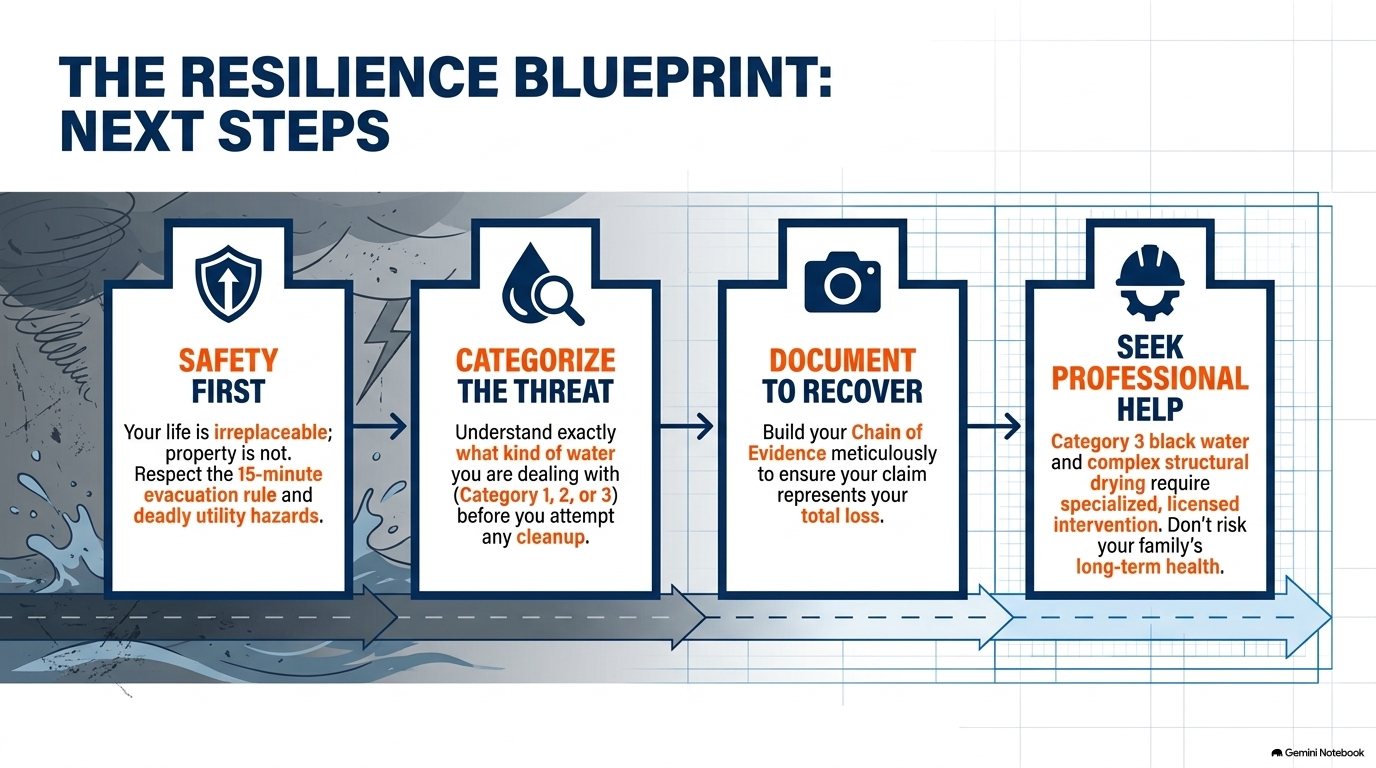
Sewage and Category 3 Cleanup: Storm surges and intense rainfall often lead to sewage backups or the introduction of "black water" (Category 3), which contains pathogens and biohazards
. Specialized c