Navigating the Unregulated Mississippi Remediation Market
Renters must be aware of the "Mississippi Exception": while local building departments require licensed plumbers or electricians for specific repairs, the state does not currently license mold assessment or remediation professionals. This places the entire burden of "due diligence" on the tenant or property owner to vet third-party "experts" who may lack technical training.The gold standard for professional restoration is the IICRC (Institute of Inspection, Cleaning and Restoration Certification) . You must demand that any contractor follow the S500 Standard for Professional Water Damage Restoration , which is the baseline technical expectation for drying and decontaminating a building.
Contractor Vetting Scorecard
Ask these five critical questions before allowing work to begin:
- Insurance Verification : Can you provide proof of current Worker’s Compensation and General Liability insurance? (Lack of insurance may leave you or the owner liable for on-site accidents).
- Technical Standards : Do you explicitly follow the IICRC S500 standard for all drying and decontamination procedures?
- Written Estimates : Will you provide a detailed scope of work and a written estimate before any work begins?
- Licensing : Are you using Mississippi-licensed tradesmen for associated plumbing or electrical work as required by local building departments?
- References : Can you provide a list of previous local customers who can vouch for the quality of your remediation?If you encounter fraud or a non-reputable contractor, contact the Mississippi Attorney General’s Consumer Protection Division immediately. Proper vetting ensures the property undergoes a technical recovery that makes it safe for re-entry.
Technical Recovery: The "Clean First, Then Disinfect" Methodology
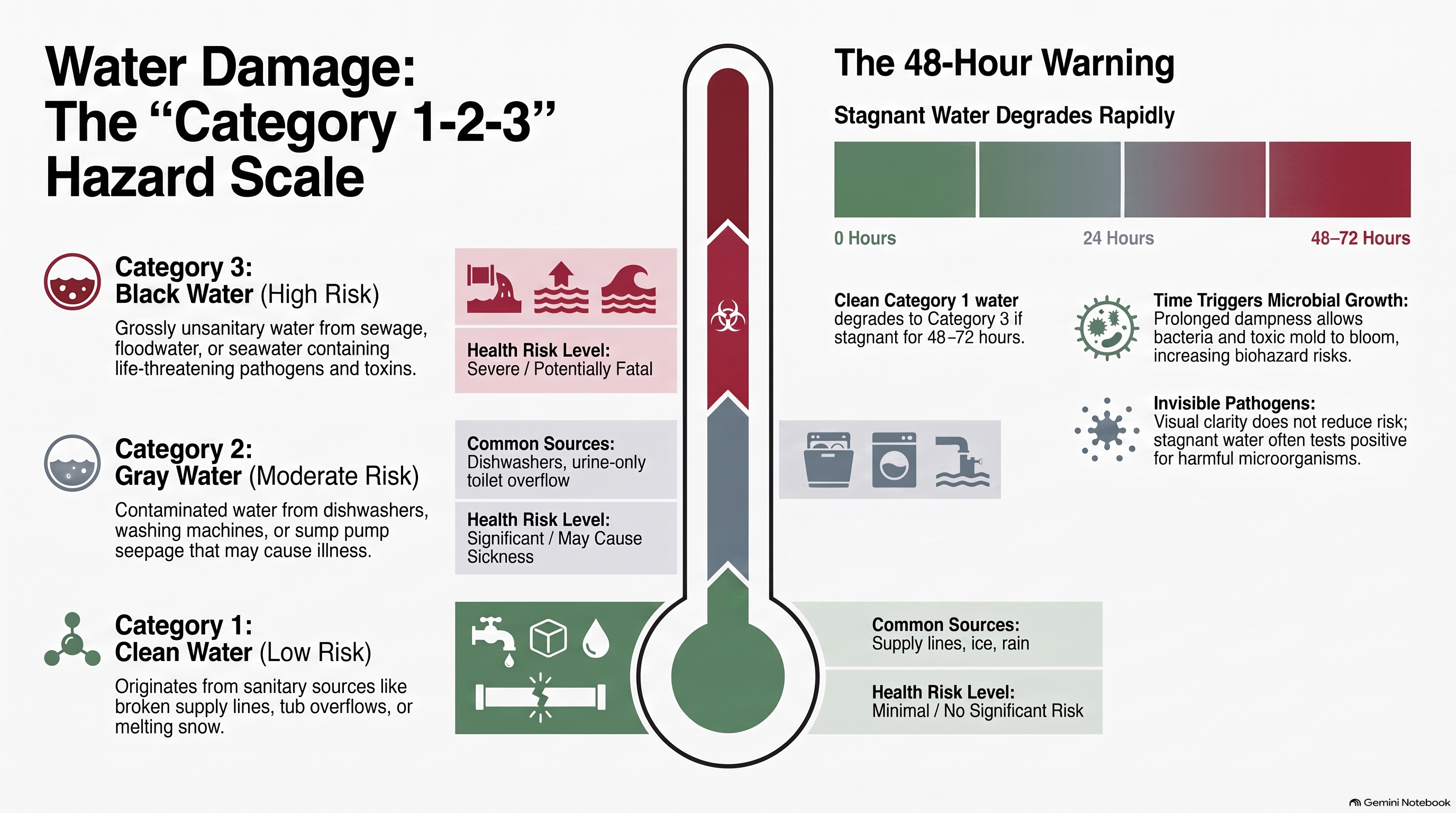
According to the Mississippi State University Extension Service, a building is only safe for re-occupancy if it follows the "Clean First, Then Disinfect" method. Many untrained contractors attempt to spray disinfectants over mud or organic debris. This is a strategic failure; pathogens are protected by layers of silt, rendering the disinfectant useless.
Pathogen and Mold Remediation Standards
Surfaces must be physically cleaned with phosphate-free detergent and water before any disinfection occurs. For the disinfection phase, use the following MSU Extension protocol:Bleach Solution Recipe for Mold and Pathogens
- Mixture : 1/2 cup ultra chlorine bleach per 1 gallon of water.
- Application : Spray on soiled surfaces and allow a "sit time" of 5 to 10 minutes.
- Post-Treatment : Rinse thoroughly with clean water.
- Prohibitions : NEVER use chlorine bleach on HVAC systems, metals, fine woods, or non-colorfast surfaces.
The "Restore vs. Discard" Threshold
Materials must be categorized by their porosity. Based on MEMA health and building analysis:
- RESTORE (Hard Surfaces) : Concrete, metal, and certain plastics can be stripped, cleaned, and disinfected.
- DISCARD (Porous Materials) : Items such as books , carpeting, upholstery, and mattresses are not worth the risk or expense of drying. If these items have been wetted, they harbor deep-seated pathogens and must be removed from the premises.As a final advisory, renters pursuing financial recovery through insurance are responsible for filing a Proof of Loss . This official claim, including documentation and repair estimates, must be in the hands of the insurance provider within 60 days of the identification of the damage. Accurate, timestamped documentation is your final requirement for a successful recovery.